How a 3D Rendered Sword Perfect for Game Design Integrates Into Your Development Workflow
Every game project, whether a solo indie release or a large studio production, runs on assets. Characters, environments, UI elements, and equipment form the visual backbone players interact with. Among these, weapon assets carry particular weight. A 3D rendered sword perfect for game design is not just a decorative object. It is a functional visual component that communicates power, era, faction, and narrative tone within seconds of appearing on screen. Understanding how this type of asset fits into a broader production pipeline saves time, reduces revision cycles, and helps maintain visual consistency across an entire project.
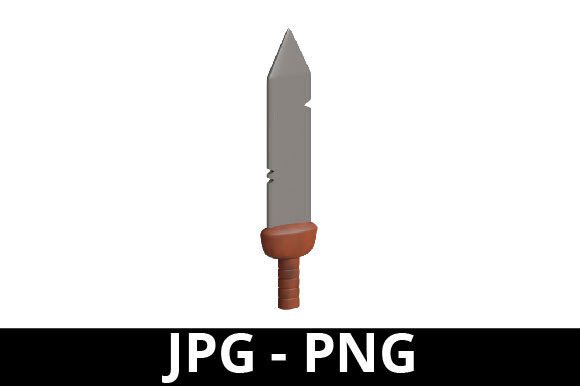
This asset category typically arrives as a ZIP folder containing multiple file formats. You will find JPG previews for quick client presentations or pitch decks, PNG sequences with transparency for UI mockups and icon placement, and the core 3D render files ready for engine import. The inclusion of both a 3D icon and a sword icon variant means the same design language can extend from in-game equipment down to inventory thumbnails and HUD elements. That continuity matters more than most teams initially realize.
Understanding What the Asset Pack Actually Contains
Before importing anything into Unity, Unreal, Godot, or a custom engine, take inventory of what the ZIP folder provides. A well-structured game equipment pack centered on a sword asset will often include the primary 3D model in formats like OBJ, FBX, or GLTF, accompanied by texture maps for metallic surfaces, normal maps for blade grooves and handle wrapping, and sometimes roughness or specular maps that define how light behaves across the steel and leather materials.
The presence of both JPG and PNG exports signals flexibility. JPG files work for lightweight prototyping, documentation, and marketing material where file size matters. PNG files with alpha channels slot directly into UI design software like Figma or Adobe XD for creating game equipment icons without needing to re-render anything. This dual-format approach means the same 3D sword asset serves the 3D environment team, the 2D UI team, and the marketing department simultaneously without duplication of effort.
Semantic variations within the pack matter too. A single ZIP might contain the sword rendered as a realistic medieval arming sword with pitted steel and worn leather, alongside a cartoon variant with exaggerated proportions and cel-shaded textures. Having both options from a single source keeps the design DNA consistent even when the art direction shifts between gritty war simulation and stylized battle fantasy.
Where the 3D Rendered Sword Fits in Pre-Production Planning
Pre-production is where most asset-related mistakes originate. Teams often rush into modeling before defining how a sword weapon behaves, scales, and reads on screen. A pre-rendered sword asset lets you validate design direction during the concept phase without committing modeling hours. Drag the PNG into a mood board, drop the FBX into a test scene, and gather feedback from art directors, game designers, and even focus groups before the production pipeline fully engages.
This is particularly useful when defining equipment progression systems. If your game features tiered loot — rusty blade to legendary steel — the rendered sword gives your balancing team a concrete reference for how visual quality should escalate alongside stats. A metallic finish with high reflectivity reads as premium. A dull, scratched surface with low specular response reads as common or damaged. These visual cues become part of the game's communication system, and locking them early prevents costly rework later.
Pre-production also benefits from the asset's military and ancient design cues. If your project spans multiple factions — a disciplined imperial army versus tribal warrior clans — the sword's design language helps establish faction identity. A knight's cruciform longsword signals order and tradition. A curved, single-edged blade suggests speed and ferocity. Rendering both from the same base asset pack ensures proportional and textural consistency even when silhouettes diverge.
Implementation During Active Development
Once production begins, the 3D rendered sword transitions from a reference object to an active game component. Import the model into your engine of choice and begin the integration checklist. Check polygon count against your target platform's budget. A sword that looks beautiful at 50,000 triangles may need decimation for mobile or Switch deployment. Verify that the texture resolution — often 2K or 4K in the source files — aligns with your memory constraints. Downsampling a sharp 4K texture to 1K is trivial. Upscaling a low-resolution source creates blur and undermines the realistic quality you selected the asset for in the first place.
Rigging and socket placement follow. Even if the sword exists primarily as a static object, it needs attachment points for character hands, scabbards, or display racks. A soldier character rig should have a designated weapon socket on the hip or back. Testing these connections early with the rendered sword reveals scale mismatches. A sword that looks appropriately sized in isolation may appear comically oversized or disappointingly small against a character model. Adjust the import scale uniformly rather than rescaling individual instances, which creates inconsistency across scenes.
Material assignment deserves focused attention. The asset likely arrives with physically-based rendering (PBR) materials configured for a specific workflow — metallic/roughness or specular/glossiness. Confirm your engine's material pipeline matches what the 3D render was authored for. The metal of the blade, the handle wrap, the pommel weight, and any gem inlays each require separate material slots if you intend to swap textures for variants. A single material across the entire mesh limits customization and forces you into a one-sword-fits-all approach that undermines the game equipment pack concept.
Creating UI and Icon Assets From the Same Source
One of the most practical advantages of a render-based asset pack is the built-in 2D export capability. The included PNG sword icon and 3D icon files eliminate the need for a separate UI rendering pass. Drop them into your inventory screen, equip menu, or shop interface. Because they originate from the same 3D source as the in-game model, players experience seamless recognition. The sword they see in the equipment slot matches the sword their warrior swings in combat. This visual continuity reduces cognitive load and increases perceived polish.
For projects that require multiple icon sizes — think 32x32 for inventory grids, 64x64 for tooltips, and 256x256 for detailed inspection views — the PNG format scales cleanly when downsampled from a high-resolution source. Avoid upscaling. If the base render is 512x512, generate your smaller sizes from that master rather than scaling up a 64x64 thumbnail. The graphic design quality of your UI depends on this discipline.
Marketers and store page designers also benefit here. The JPG renders work for Steam capsule images, app store screenshots, social media posts, and press kits. Using the same 3D sword asset across development and promotion creates a unified visual identity. Potential players browsing your store page see exactly what they will encounter in-game. That honesty builds trust and reduces refund requests rooted in visual misrepresentation.
Post-Production Polish and Quality Control
As the project nears completion, the sword asset undergoes final quality assurance. Check for Z-fighting where the blade geometry intersects with character hands or environment colliders. Verify that the steel material responds correctly across all lighting conditions present in your levels — bright outdoor daylight, dim dungeon torchlight, and the harsh glare of a fight arena. A material that looks perfect in one lighting scenario can appear flat, overly reflective, or color-shifted in another.
Consistency audits become essential at this stage. If your game features 50 weapon assets sourced from multiple packs or artists, the rendered sword must not stand out awkwardly. Compare polygon density, texture resolution, material response, and silhouette complexity against the broader equipment catalog. A hyper-detailed medieval sword next to a low-poly knife breaks immersion. Use the sword as a benchmark if it represents your target quality level, or adjust it to match the established average.
Performance profiling matters for game design projects targeting multiple platforms. Draw calls, shader complexity, and texture memory all contribute to frame budget. A 3D rendered sword using three material slots with 2K textures consumes more resources than a single-material, 1K-textured version. Profile on your minimum-spec target hardware and optimize accordingly. The asset's quality should never come at the expense of playability.
Long-Term Asset Management and Reuse
After launch, the rendered sword continues to hold value. Game updates, DLC expansions, seasonal events, and sequels all benefit from a well-organized asset library. Archive the original ZIP folder with clear naming conventions. Document which engine version the asset was tested against, what scale adjustments were made, and any material modifications applied during integration. Future you — or the next developer who inherits the project — will reference these notes when revisiting the game assets months or years later.
Reuse extends beyond the original project. A freelance design professional might repurpose the sword across multiple client projects, adapting the armor and military styling to fit different art directions. An educator teaching game development can use the asset as a teaching tool for import workflows, material setup, and UI integration. A content creator producing tutorial videos benefits from having a consistent, high-quality 3D render to demonstrate techniques without licensing concerns.
Consider the asset's role in prototyping future ideas. Before committing to a new battle mechanic or equipment system, drop the existing sword into a test scene and experiment. Its availability lowers the barrier to iteration. You can validate gameplay concepts with production-quality visuals from day one, which improves stakeholder communication and accelerates decision-making.
Practical Integration Tips Across Different Workflows
The way you integrate a 3D sword asset depends heavily on your role. A solo indie developer might import it directly, configure materials manually, and handle both 3D placement and 2D icon implementation personally. Their priority is speed and simplicity. A studio environment distributes the same asset across specialists — one person handles engine import and material setup, another manages UI icon placement, and a third uses the JPG renders for marketing collateral. Clear folder structures and naming conventions prevent version conflicts when multiple people access the same game equipment pack.
For educators, the asset becomes a teaching scaffold. Students can inspect a professionally authored 3D rendered sword to understand topology flow, UV unwrapping, texture painting techniques, and PBR material construction. Reverse-engineering a high-quality asset teaches practical skills that abstract tutorials cannot replicate. The included file formats mean students working in different software packages — Blender, Maya, 3ds Max, Cinema 4D — can all participate using the same source material.
Small business owners producing gamified marketing content or interactive product demonstrations can leverage the cartoon and realistic variants to match brand tone. A financial literacy app gamifying savings goals might use the stylized sword as a progress marker. A historical documentary companion app benefits from the realistic medieval version. The asset adapts to contexts far beyond traditional gaming, and recognizing those applications expands its return on investment.
Making Informed Decisions About Asset Selection
Not every 3D rendered sword perfect for game design will suit your project. Evaluate the art style alignment before purchasing or downloading. A photorealistic steel blade with intricate handle carvings may clash with a low-poly, minimalist art direction. Conversely, a heavily stylized cartoon sword undermines a gritty war simulation. Match the asset to your established visual language or use it as the foundation around which you build that language.
Check licensing terms carefully. Some asset packs permit commercial use in shipped games but restrict redistribution or resale as standalone products. Others require attribution. Understand what your intended use case — commercial release, client project, educational material, crowdfunding campaign — actually permits under the license. Getting this wrong creates legal exposure that no amount of visual quality can offset.
Finally, assess the asset's modularity. Can you swap the blade texture independently of the handle? Are the material IDs cleanly separated? Does the geometry support easy modification if you need to add runes, notches, or environmental wear? A flexible game equipment asset pays dividends every time you adapt it to a new context. Rigid, single-purpose assets demand replacement the moment requirements shift.
The integration of a 3D rendered sword into your workflow is ultimately a practice in preparedness. The asset itself is a starting point. The planning, testing, optimization, and documentation you wrap around it determine whether it becomes a frictionless contribution to your game design process or a recurring source of technical debt. Treat it as a component in a larger system, give it the same rigor you apply to code architecture and gameplay balancing, and it will serve your project from concept through launch and beyond.