From Simple Line Icon to Creative Engine
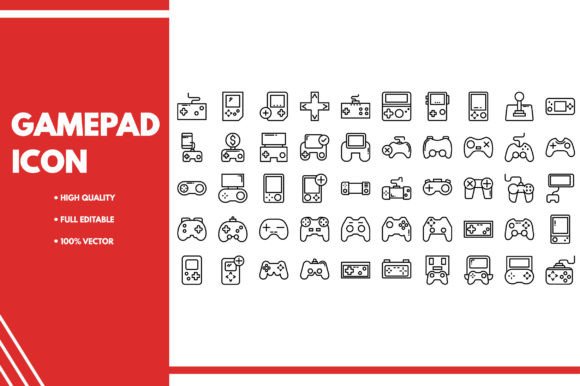
When you encounter 50 Gamepad Line Icon, you’re not just looking at a bundle of graphics. You’re unlocking a versatile creative vocabulary built around one of modern entertainment’s most recognizable symbols: the gamepad. This collection is, at its core, a minimalist toolkit. Each icon strips the controller, joystick, and associated gaming concepts down to their essential lines, creating clean, scalable vector art that serves as a blank canvas for imagination.
Why a Line Icon Library Matters
In a world saturated with complex 3D renders and detailed illustrations, the power of a line icon lies in its clarity and flexibility. These isolated, often white or single-color symbols act as visual anchors. They communicate gaming, control, technology, and fun without visual clutter. For a designer or marketer, this is practical gold. You can integrate them into layouts without overwhelming the content, use them as subtle background elements, or combine them to build more complex graphic narratives. The “50” signifies variety—multiple angles, styles, and compositions of the same device—providing options to match the tone of any project, from a futuristic tech blog to a playful cartoon-style guide for players.
Creative Applications Beyond the Screen
The obvious use is digital: website menus, app buttons, online course materials, social media posts for gaming communities, or PC software interfaces. But the creative leap happens when you think beyond the screen. Consider these project ideas:
- Educational Diagrams: Use the line icons to create clear, engaging visuals explaining electronic device components or the history of console interfaces in a presentation for educators or students.
- Branding for Physical Products: A small business owner selling custom joypad skins or wireless equipment could use these icons on packaging, labels, or merchandise, creating a consistent, modern design language.
- Pattern and Texture Creation: Repeat and arrange the icons to form unique backgrounds for website headers, fabric prints for gamer apparel, or wall art in an arcade or gaming station.
- Interactive Prototypes: For a freelancer or entrepreneur developing a virtual control concept, these line drawings can serve as placeholder UI elements in early mockups, focusing attention on layout and flow.
Adapting the Toolkit for Different Audiences
The neutral, realistic line style of a typical gamepad line icon is its greatest asset for adaptation. By changing only the context, color, or accompanying text, you pivot the entire message.
For a blogger writing serious technology reviews, using a clean, single pad icon next to a headline conveys topic authority without childishness. For a community event organizer promoting an online tournament, grouping several icons dynamically around a date suggests activity and participation. An illustrator might take the base line art and embellish it, adding custom colors, textures, or playful distortions to create a unique cartoon character holding the controller. The keypad and stick details within the icons serve as authentic hooks that resonate with genuine players, while the simplicity keeps the image accessible to a broader audience curious about digital entertainment.
Maintaining Effectiveness in Your Projects
With so many icons and possibilities, discipline ensures your results remain effective. Start by defining the core purpose of your project. Is it to instruct, advertise, decorate, or navigate? Select icons from the 50 Gamepad Line Icon set that align with that purpose—a single, bold icon for a call-to-action button, or a series of sequential icons to show a process. Consistency in size and color treatment across your project creates a professional, organized feel. Remember, these are graphic tools, not the story itself. Let your written content or overall design concept be the driver, and use the icons as supportive visual punctuation. This keeps the work original and audience-friendly, avoiding the trap of generic gadget-cliché aesthetics.
From Symbol to Story: Building Larger Concepts
The individual icon is a word; combining them lets you write a sentence. Think of the 50 Gamepad Line Icon collection as a visual lexicon for gaming culture. You can assemble icons to depict evolution—from a simple joypad to a complex modern controller. You can create contrast by pairing a stark line icon with a lush photographic background, highlighting the blend of digital and realistic worlds. For a publisher creating an infographic about player demographics, different icons could represent different platforms (PC, console, mobile) in a clear, comparative chart.
This approach is particularly useful for marketers and creators who need to communicate complex ideas quickly. A line icon of a controller with a wireless signal graphic can instantly suggest “wireless connectivity” without a paragraph of text. An icon placed next to a “play” button on a video interface reinforces the action. The futuristic or modern feel comes not from the icon alone, but from how you integrate it into a contemporary layout with clean typography and thoughtful spacing.
Practical Steps for Implementation
Begin by auditing the full set. Identify icons that represent whole controllers, isolated components like sticks or buttons, and more conceptual symbols like a virtual joy symbol. Group them mentally by style—some may be more angular, some more rounded. Then, sketch out your need. If you’re designing a website section for “Gaming Equipment,” you might use a dominant, detailed pad icon as a section hero, and smaller, simpler icons as bullet points for features like “ergonomic design” or “responsive keypad.” Always test your choices. Does the icon read clearly at small sizes? Does it retain its meaning when colored? Does it compete with other visuals? This grounded, iterative process ensures your creative use of the 50 Gamepad Line Icon set enhances communication, rather than just decorating it.
Ultimately, this icon library is a bridge between the universal recognition of a gaming controller and the specific message you need to convey. It provides the visual raw material to speak about fun, technology, control, and interaction across a spectrum of professional and creative contexts. By focusing on its application—how it can structure information, suggest themes, and guide the user’s eye—you transform a set of simple line drawings into a powerful component of your visual storytelling toolkit.