Broadcast Screen Overlay Bundle Vector: Integrating Flexible Stream Graphics into Your Content Workflow
Every live stream, recorded gameplay video, or real-time webinar relies on a visual backbone that holds the audience’s attention without distracting from the main content. A broadcast screen overlay bundle vector solves this challenge by providing a cohesive set of frame elements, alerts, and decorative accents that can adapt to any screen layout. Instead of cobbling together mismatched graphics or paying for custom one-off designs each time you change your theme, you install a full bundle of coordinated vectors that maintain a consistent visual language across every scene. For anyone building a channel identity, the difference between stock PNG overlays and a fully editable vector package becomes clear the moment you need to resize a frame for a tablet viewer or tweak a color to match a sponsor’s palette.
Where a Vector Overlay Set Fits Into a Streamer’s Creative Process
In practical terms, a broadcast screen overlay bundle vector enters your workflow right at the point where you start structuring your streaming software’s scene collection. You typically spend time before a broadcast setting up sources, positioning webcam windows, and deciding where alerts and chat boxes will appear. The overlay set provides the drawn boundaries that give each element a defined, profession‑looking space. Because the files arrive in true vector format—often paired with JPG previews—you are not locked into a single resolution or aspect ratio. You can open the main artwork in an application like Adobe Illustrator, adjust a webcam frame to a narrower width for a just‑chatting scene, or scale an alert box to show up cleanly on a 4K canvas. This kind of structural edit takes moments, and the result remains crisp at any size.
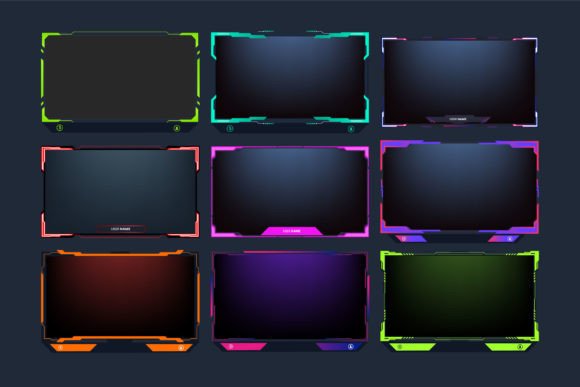
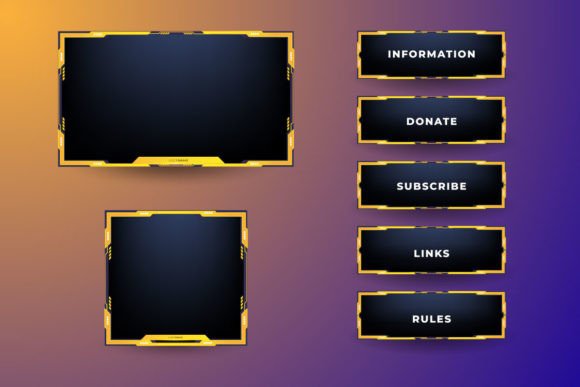
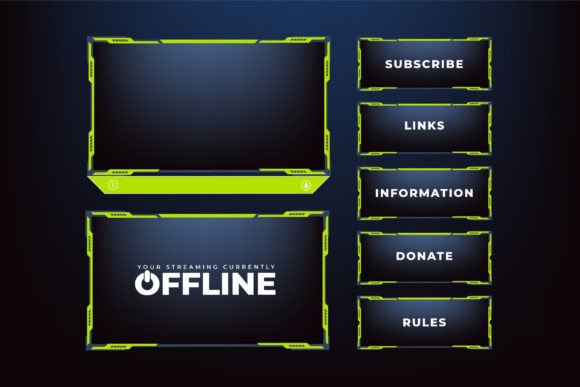
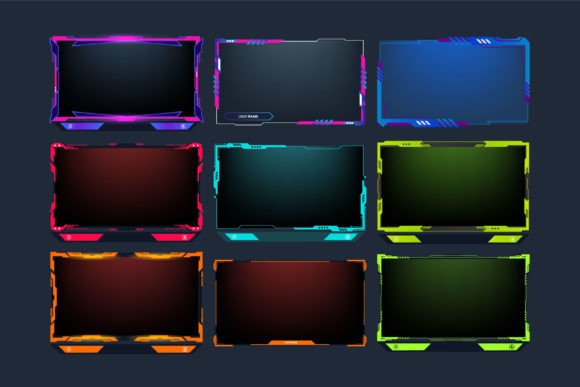
The neon‑accented designs—with their green, yellow, and purple hues—bring a futuristic online gaming aesthetic that fits modern esports, tech commentary, or late‑night talk shows. However, the value is less about the specific glow effect and more about the fact that each stroke and fill is a controllable path. You can replace a gradient, mute a color for a minimalist look, or extract just the corner ornament to use as a watermark. This adaptability lets the same bundle support a completely different brand identity months later, without requiring a new purchase or collaboration with a designer.
Pre‑Production: Preparing Your Scene Collection with Vector Assets
Before you go live, the overlay bundle helps you build a scene library that reduces mid‑stream fumbling. Rather than placing individual PNGs that might have been downloaded from various sources, you can import your edited vector exports into OBS Studio or Streamlabs once, know they match, and recall them with a single preset. This process usually involves exporting the Illustrator or Affinity Designer files as high‑quality PNG sequences, keeping the green, yellow, and purple neon tones vibrant against dark backgrounds. Because vector-native exports handle transparency without jagged edges, the anti‑aliasing of a diagonal frame corner looks clean whether the underlying gameplay is bright or shadowy.
During pre‑production, you also think about overlay layering. A typical stream might layer a background scene, then a gameplay capture, then a camera frame, then an alert box, then a chat overlay. The vector bundle, when properly organized, gives you multiple variants—full‑screen framing borders, compact circular camera enclosures, side‑bar chat containers—all drawn with the same futuristic line weight and glow radius. Placing these in the correct z‑order means you can later change the camera shape without disturbing the rest of the layered system. This kind of deliberate preparation is what separates a stable broadcast from one where graphics flicker or misalign when a source resolution changes.
During the Broadcast: Real‑Time Use and On‑Screen Consistency
Once you are live, the overlay elements silently do their job. The neon frames define the webcam area, preventing it from bleeding into HUD elements of a game. The alert bundle—often included as a sub‑set within a larger overlay package—shows follower notifications, tips, or subscriber calls inside shapes that match the rest of the scene. Because the whole set was designed together, a viewer does not perceive a disjointed patchwork of graphics; they see one visual environment. Color consistency across green accent lines, purple glows, and yellow highlights makes the channel look curated, which can affect how long a newcomer stays and whether they associate the channel with a polished experience.
On the technical side, relying on vector‑derived PNG exports during a broadcast does not tax your streaming PC any more than an ordinary image. The file sizes can be kept modest because solid‑color glow effects and simple geometry compress well. If you ever need to modify an element mid‑stream—maybe the donation goal bar offends a sponsor’s color guidelines—having the editable vector source means you can quickly change the hue in your design software, re‑export, and hot‑swap the image without disrupting the stream’s scene collection configuration. This freedom changes the way you handle real‑time brand adjustments.
Post‑Broadcast: Repurposing Overlays for Other Content
After a stream ends, the overlay bundle’s usefulness continues. The same camera frame that highlighted your face during a raid can become the border for a YouTube thumbnail. Because the design is vector‑based, you can pull elements apart in Illustrator and use only a corner decoration as a detail in a website banner. You might take the alert box background, remove its text, and place it behind an Instagram story poll. Each repurposing move maintains brand continuity while giving you fresh visual material without starting from scratch. This reusability is a direct outcome of having an editable, non‑destructive source file rather than a flattened raster image.
If you edit videos from your broadcasts, overlays also serve as consistent intros, transitions, and lower‑third backgrounds. You can animate a neon sweep across the vector frame, export it as a short overlay clip, and reuse it in multiple episodes. Because the vector structure separates elements by layers, you can even isolate the glow effects and apply them independently in video editing software. All of this supports a multi‑platform content workflow, where a single design investment feeds your live streams, your recorded videos, your social media teasers, and your podcast thumbnails.
File Organization and Software Compatibility
A broadcast screen overlay bundle vector usually arrives inside a compressed ZIP file. When you extract the contents, you find both the editable vector source files—typically AI, EPS, or SVG—and a set of ready‑to‑use JPG previews. For many users, the first step is to keep the original ZIP as a backup and extract a working copy into a project folder clearly labeled with the bundle’s theme. From there, opening the primary vector file in Adobe Illustrator (or an alternative like Inkscape or Affinity Designer) reveals the full design structure. Layers are often named logically: “frame_left”, “frame_right”, “glow_green”, “text_placeholder” and so on. Naming conventions save time later, especially if you hand the file to a teammate for custom adjustments.
Compatibility is a key factor in long‑term usability. As long as the vector file uses standard paths and fonts that are outlined, you will never face a missing‑font error years later. You also sidestep resolution limitations. If you start streaming in 1080p today but move to 1440p or 4K tomorrow, the same vector template exports a pixel‑perfect frame at the new dimensions. This future‑proofing aspect is often overlooked until someone tries to enlarge an old 720p PNG overlay and sees a blurred mess. With a vector bundle, scaling is a non‑issue.
The convenience of working with a well‑organized bundle from Ifti Digital Graphic Store also shows up during color correction. Suppose your channel’s lighting shifts and you want the overlays to feel warmer. Instead of applying a filter to every PNG export—which can degrade glow quality—you can open the master vector file, adjust a global swatch, and re‑export all elements with the updated hue. This bulk edit, possible only because the bundle was built as a coordinated set, enforces visual consistency and saves hours.
Practical Customization: Editing Neon Colors and Frame Details
When you first open the vector file, the default neon palette—green, yellow, and purple—already creates a high‑contrast, futuristic look. But real workflows demand adaptation. Maybe your brand uses blue and orange, or your sponsor requires a monochromatic scheme. The vector nature means you select the glow paths, change their stroke color or apply a different Gaussian blur effect, and immediately see the result on your artboard. If the bundle contains multiple variants (a square camera frame, a widescreen alert box, a circular subscriber icon holder), you can repeat this color change across all elements in minutes and then batch‑export new PNGs. This process does not demand advanced illustration skills; basic familiarity with the direct selection tool and the color panel is usually sufficient.
Beyond color, you might need to adjust the thickness of a border or remove an intrusive element that clashes with your gameplay HUD. Because the design is a clean vector construction, you can delete a path or adjust its anchor points without leaving pixel‑level artifacts. Even inserting your own logo into a designated placeholder area becomes seamless because you can match the stroke style of the rest of the bundle. Such small adjustments make the difference between an overlay that looks borrowed and one that feels purpose‑built for your channel.
Integrating the Overlay Bundle With Other Production Tools
The vector overlays do not exist in isolation. They interact with streaming software, alert systems, and hardware encoders. On the software side, you typically add image sources to OBS scenes, positioning them above game or camera layers. If you use StreamElements or similar alert platforms, you upload the alert box background from your bundle as a custom image, and the platform’s CSS or browser source settings can further tint or animate it. The overlay bundle vector then becomes a visual anchor that unifies native OBS sources and web‑based overlays. For hardware switchers—such as ATEM Mini setups—you can export the frame as a still with alpha, load it into the media pool, and key it over inputs. The resolution independence of the vector source means it will not break when your switcher outputs a different size than your capture card expects.
Consistency across these tools is not automatic; it requires an intentional workflow where you maintain a master project folder with the latest vector exports, label each export clearly (e.g., “camera_frame_1440p_green.png”), and version them. If you ever update the overlay design, you increment the version number and replace the image references in your streaming software. This small organizational habit prevents on‑air mishaps where an old, incorrectly colored frame appears during a sponsored segment.
Long‑Term Use and Visual Brand Evolution
A single broadcast screen overlay bundle vector can serve a channel for years, but that longevity depends on treating it as a living asset rather than a static download. Over time, you might introduce new scenes—a podcast table, a coding room, a retro gaming Sunday—and you want the overlay to adapt without losing brand recognition. Because the vector file allows you to mix and match elements from the bundle, you can create new variations by swapping frame shapes, removing glows, or altering accent colors. Many streamers keep a master file where they paste elements as needed and export scene‑specific sets, always starting from the same core palette and line style.
Quality control becomes easier because any visual discrepancy is traceable back to the source vector. If a frame appears blurry in a viewer’s screenshot, you know to re‑export at a higher resolution or to check whether you accidentally scaled a rasterized copy. The original vector never degrades. This reliability makes the bundle a sensible investment for those who treat streaming as a serious long‑term project. It also simplifies collaboration: a graphic designer helping you refresh the channel can receive the vector file, understand its structure quickly, and apply professional modifications without redrawing everything.
When you acquire such a bundle from a store like Ifti Digital Graphic Store, you also gain access to files that have been tested for compatibility. The included JPG previews serve as quick‑reference guides, and the ZIP packaging means you get everything in a compressed archive you can extract with WinZIP, WinRAR, or a built‑in extraction tool. After extraction, the vector files are ready for editing. If a technical issue arises, the seller’s contact option provides a direct line for help, which is reassuring when you are finalizing assets minutes before a scheduled broadcast.
Making the Overlay Bundle Part of Your Standard Operational Routine
Adopting a broadcast screen overlay bundle vector into your routine is less about a one‑time download and more about establishing a repeatable process. At the start of each streaming season or content cycle, you review the visual elements you already have, decide what needs a refresh, and return to your master vector file. You make the adjustments, export the new PNG set, and update your OBS scenes. This workflow mirrors how professional studios manage their broadcast graphics packs—except that you, as an independent creator, have full control without the recurring license fees. The only ongoing consideration is keeping your design software updated and your file structure logical.
For those who manage multiple channels or produce content for clients, the bundle becomes a template that can be recolored and slightly rearranged to create distinct looks while reusing the same underlying geometry. This efficiency reduces the lag between concept and execution, allowing you to launch new visual themes in a fraction of the time it would take to commission fresh artwork. The futuristic neon aesthetic of this particular bundle—with its vibrant green, yellow, and purple color range—provides a recognizable foundation that can tilt toward cyberpunk, arcade, or high‑tech minimalism depending on small tweaks.
In the end, a broadcast screen overlay bundle vector does more than decorate a screen. It streamlines the design‑to‑broadcast pipeline, ensures visual consistency across program segments, and gives you a flexible base that grows with your channel. By focusing on vector editability, proper file organization, and intentional integration with your streaming environment, you transform static artwork into a dependable part of your content creation toolkit.