Evaluating the Level 13 Unlocked T-Shirt Design for Your Next Project
Finding a graphic that resonates with gaming culture while remaining visually clean and print-ready can be more challenging than it first appears. The Level 13 Unlocked T-shirt Design has gained attention among print-on-demand sellers, independent creators, and gaming merchandise buyers looking for a straightforward, typography-driven concept. This article examines what the design offers, where it fits well, and what practical factors to weigh before committing to a download or purchase.
Understanding the Core Concept
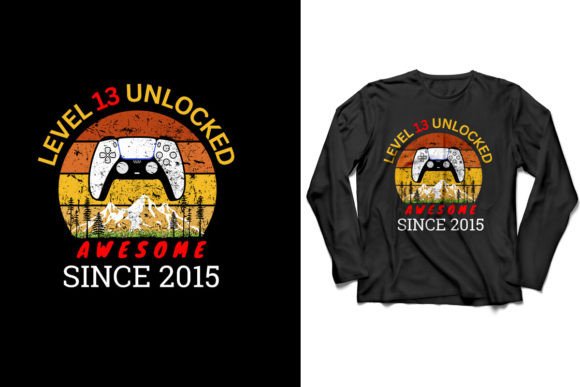
At its heart, the Level 13 Unlocked T-shirt Design is a gaming-inspired typography graphic built around the familiar milestone‑achievement language found in role-playing games, platformers, and progression‑based titles. The phrase “Level 13 Unlocked” mimics an in‑game notification, tapping into the shared experience of reaching a new stage, earning a badge, or crossing a threshold that dedicated players immediately recognize. The visual treatment typically relies on bold, often distressed or layered lettering, sometimes accompanied by subtle gaming‑themed iconography such as controller silhouettes, achievement stars, or unlock symbols.
Creators offering this asset usually frame it as a versatile vector file delivered in multiple formats. The common deliverables include a PNG with a transparent background for easy layering, a JPG on a white background for straightforward printing, and an underlying vector source that preserves sharpness at any size. This combination gives users flexibility whether they are mocking up a gaming T-shirt design for an online store, producing a poster, or incorporating the graphic into a composite layout.
Why This Particular Design Attracts Interest
Several practical motivations bring buyers to a design like this. Understanding these can clarify whether the asset aligns with specific project goals.
- Immediate recognition value: The achievement‑unlock metaphor is widely understood across age groups and gaming platforms. Someone wearing the shirt signals insider knowledge without needing to explain the reference.
- Numerical specificity: The number 13 carries layered meanings. For some, it is simply a humorous milestone beyond the typical levels 1 through 10. For others, it may correspond to a significant birthday, anniversary, or inside joke within a gaming group.
- Typography‑first composition: Unlike designs that rely on intricate illustrations, a funny typography graphic gaming T-shirt Design leans heavily on lettering style. This often translates well across different garment colors and fabric textures without losing legibility.
- Production simplicity: Because the graphic is primarily text‑based, it demands less from printing processes. Fine details that plague highly illustrated designs are less of a concern, meaning fewer rejected samples during quality checks.
Practical Benefits and Strengths
Moving beyond the initial appeal, several concrete advantages emerge for users who obtain the Level 13 Unlocked T-shirt Design as a shirt ready for prints resource.
Multi‑format delivery reduces prep work. Receiving both a PNG transparent file and a JPG white background file means less time spent manually removing backgrounds or converting color spaces. The transparent PNG slides neatly onto any mockup backdrop, while the JPG provides an immediately usable version for light‑colored garments where background removal is unnecessary.
Vector scalability protects against quality loss. When a design arrives as a true vector file, scaling from a chest‑sized print up to a large poster graphic does not introduce pixelation. This future‑proofs the purchase for anyone considering multi‑product use beyond simple apparel.
Broad demographic crossover. The design avoids strong language, niche references tied to a single game title, or visuals that only appeal to hardcore enthusiasts. A more general milestone‑based message can attract casual players, retro gaming fans, and even people who enjoy the aesthetic without deep gaming knowledge.
Typography humor ages relatively well. Visual trends in gaming illustration shift rapidly. A type‑focused joke rooted in universal game mechanics may have a longer shelf life than a design dependent on a specific character or meme format.
Tradeoffs and Considerations to Keep in Mind
No design asset suits every purpose, and evaluating the potential downsides leads to better purchasing decisions. A candid look at the limitations of this style prevents mismatched expectations.
Number‑specific commitment limits audience breadth. While the number 13 carries its own appeal, it is inherently exclusive. Consumers who do not connect with that particular digit, whether personally or humorously, will scroll past. Someone turning 30, for instance, may not find the same charm in level 13 that a younger teenager or a group celebrating a 13th event might.
Typography‑driven designs can feel sparse. For buyers accustomed to rich, illustrated gaming tees filled with characters, environments, and detailed scenes, a primarily text‑based graphic may seem understated or lacking visual impact. The design relies entirely on letterform choices, weight, and texture to carry the message.
Overlap with similar milestone designs exists. The concept of unlocking levels is not proprietary. Shoppers browsing marketplaces will encounter numerous variations of this same idea, from Level 10 to Level 99. Standing out often depends on supplemental marketing, branding, and product photography rather than the graphic alone.
Print placement requires careful sizing decisions. A compact typographic lockup can look undersized on larger shirt dimensions if scaling is not adjusted. Users must test proportions across size runs to avoid a design that appears lost on XL garments or cramped on youth sizes.
Ideal Situations Where This Design Shines
Certain use cases align more naturally with the strengths of the Level 13 Unlocked T-shirt Design. Recognizing these scenarios helps buyers self-select appropriately.
Birthday or milestone event merchandise. For a party celebrating a 13th birthday, a 13th wedding anniversary approached through a gamer lens, or an esports team reaching a seasonal benchmark, the numeric specificity transforms from a limitation into a feature. Custom one‑off printing for small groups becomes straightforward with a ready‑to‑go file.
Print‑on‑demand storefronts seeking quick listings. Sellers who need to rapidly populate a catalog with test designs benefit from assets that require minimal customization. The print‑ready formats mean uploading and publishing can happen in minutes rather than hours of editing.
Poster and wall art applications. The mention of suitability as a Poster matters here. A clean, bold typographic statement printed at larger scale can serve as affordable room decor for a gaming setup without overwhelming the space with dense imagery.
Mixed‑graphic bundles and design kits. Graphic designers building themed bundles or layered compositions may find value in using this text element as a focal headline paired with other supporting visuals. The transparent background file integrates cleanly into more complex layouts.
Situations Where Alternatives May Be Worth Considering
Equally important is recognizing when a different direction might serve the project better. No single gaming T-shirt Design vector solves every need.
When detailed illustration is expected. Audiences accustomed to hand‑drawn character art, extensive color renderings, or scene‑based compositions may perceive a typography‑only piece as incomplete. In these cases, expanding the search to include illustrated gaming graphics or commissioning a custom piece may yield better engagement.
When targeting a broad age range with a single product. If the goal is a universal “gamer” shirt that grandparents, parents, and kids could all wear, the specificity of the number becomes a friction point. A more general slogan or a purely visual design without numeric references could capture a wider market.
When print method limitations exist. Some decoration techniques handle fine typographic details differently than solid block graphics. Screen printers working with coarse mesh counts or direct‑to‑garment operators dealing with textured fabrics might encounter slight blurring on thin serifs or heavily distressed lettering. Checking mockups against the actual print method beforehand remains essential.
When exclusive, one‑of‑a‑kind artwork matters. Because this design may appear across multiple stores using the same source file, brands prioritizing unique identity may prefer to invest in original artwork rather than a widely available asset.
Assessing File Format and Print Readiness
One practical layer that deserves careful attention is the handling of the provided file types. The promise of receiving a PNG Transparent JPG white background pairing is common in design marketplaces, yet not all deliverables are created equal.
Before purchasing, verifying the resolution and dimensions matters. A 300 DPI file at actual print size ensures the design translates cleanly to physical products. Lower resolution files, even with a transparent background, can produce soft edges when scaled up. Similarly, confirming whether the vector version includes outlined text is important for users who may need to edit colors or adjust letter spacing without requiring the original typeface.
Transparent backgrounds in PNG format work best for dark‑colored garments where the design must float without a bounding box. The JPG on a white background streamlines printing on white or light‑pastel shirts, but using it on dark fabrics requires an additional background removal step. Having both options upfront saves workflow friction.
Decision‑Making Framework for Buyers
Rather than asking whether the design is objectively good, a more productive question is whether it aligns with specific functional needs. Several criteria can guide this evaluation.
- Does the number 13 serve a purpose for your audience, or is it an arbitrary choice that may narrow your reach?
- Will your product lineup benefit from a typography‑forward style, or does your niche demand richer illustrative content?
- Do you have the tools to verify and adjust vector files, and are you comfortable checking resolution before listing?
- Is the design being used for a single quick‑turn project, or does your brand require visual uniqueness over time?
Answering these questions practically reduces the risk of buying an asset that sits unused. The Level 13 Unlocked T-shirt Design functions best when the buyer has clear intent, the number carries contextual meaning, and the clean typographic look matches the intended product aesthetic.
Weighing the Overall Value Proposition
What ultimately determines satisfaction with a design like this is not the graphic in isolation, but the alignment between the asset, its application, and the end user's expectations. A funny typography graphic gaming T-shirt Design can perform exceptionally well when placed in front of the right audience through targeted listings, effective mockup photography, and accurate product descriptions. The same graphic can underperform when dropped into a store without context, surrounded by significantly different visual styles, or forced onto garment types where the print dimensions clash with the composition.
The inclusion of print‑ready formats adds tangible value by removing technical barriers, yet it does not substitute for sound product decisions. Testing a single sample print, evaluating color contrast on different shirt blanks, and gathering feedback from a small segment of the target audience can reveal whether the design resonates strongly enough to warrant full‑scale production.
For creators and sellers comfortable with the typography‑focused approach, the design provides a solid, workable foundation. For those whose needs drift toward highly illustrated, one‑of‑a‑kind artwork or broadly generic gamer messaging, continuing the search will likely lead to a better match. The key lies in recognizing which camp you fall into before the download completes.