Stars Shape Halftone Background 50-23: A Practical Design Resource
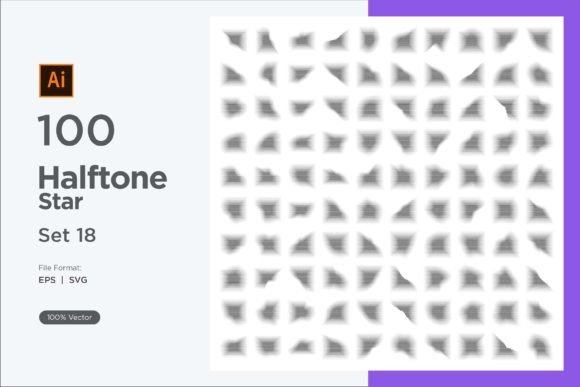
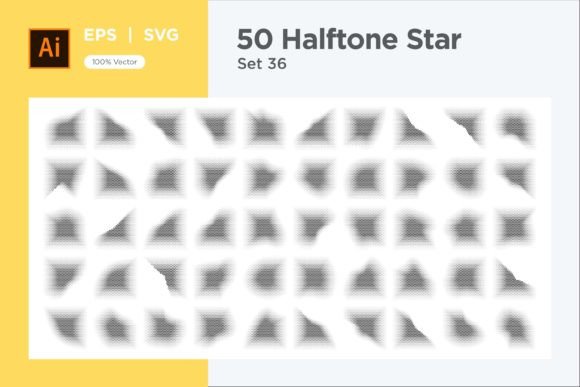
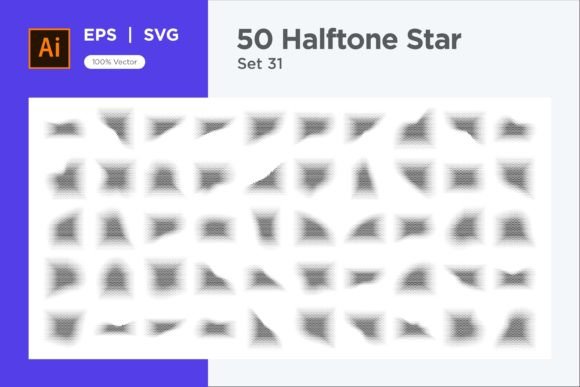
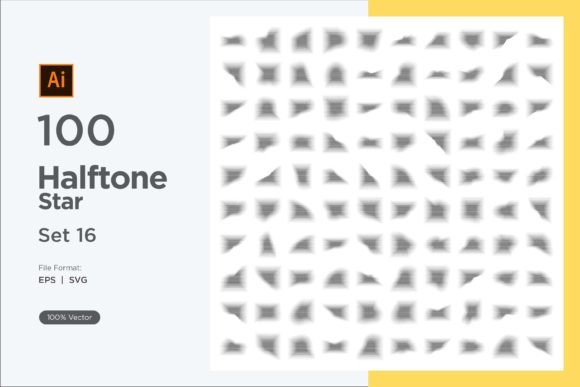
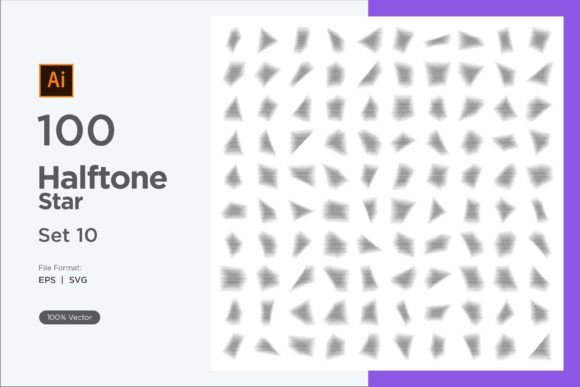
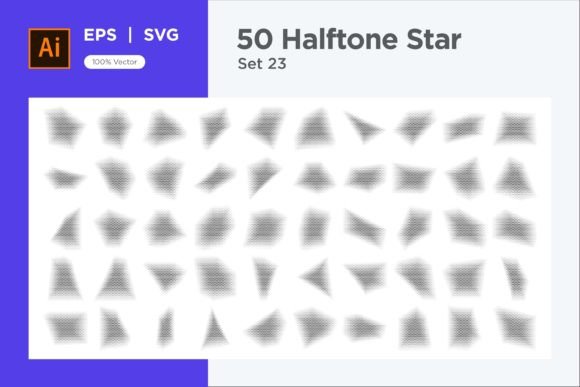
When a project calls for a textured, celestial-themed backdrop or a subtle graphic layer that avoids flat color, the right vector pattern can save hours of manual work. Stars Shape Halftone Background 50-23 is a curated collection of 50 star-based halftone patterns, delivered in both EPS and SVG formats. Rather than a single repetitive tile, the set presents multiple variations built around the same core concept: repeated star silhouettes treated with halftone shading. This approach yields backgrounds that feel dimensional, lightly retro, and versatile enough for both digital and print workflows. The resource is designed for anyone who needs a ready-to-use, scalable pattern without having to construct halftone effects from scratch.
What sets this particular collection apart is not the novelty of star shapes or halftone textures individually, but how they are combined across a cohesive series. Each file offers a distinct interpretation of the Star Shape Halftone Background idea—some lean into dense, tightly packed constellations; others adopt a more scattered, airy distribution. The halftone treatment ranges from fine dot gradients that simulate soft shadows to coarser patterns that read almost like vintage print screens. This variety means a designer can pick a background that matches the mood of a poster, website hero section, packaging mockup, or social media graphic without needing to adjust a single slider in a halftone filter.
What Makes the Combination of Stars and Halftone Effective
The aesthetic value of a halftone star pattern lies in the interplay between geometric simplicity and textured depth. A plain star silhouette, even when repeated, can look monotonous. Introducing a halftone effect—where the density of dots or the gradient within each star changes—immediately adds visual weight and direction. In Stars Shape Halftone Background 50-23, this technique is used consistently, meaning that every file maintains a unified design language. The stars are not merely filled with a solid color; they have internal modulation that makes the background appear lit, as if a light source is hitting the surface unevenly.
This effect works particularly well for projects that need to evoke a dreamy, nocturnal, or cosmic feel without tipping into literal starfield depictions. Because the halftone introduces a slightly mechanical, retro printing quality, the backgrounds also sit comfortably in designs that reference mid-century illustration, zine culture, or early video game graphics. The star itself is a universal shape, so the pattern rarely feels niche—it adapts to themes ranging from education and children’s content to futuristic tech branding, depending on color choices.
Format and Technical Usability
One of the most practical aspects of this resource is its dual-format delivery. The package includes 50 EPS files and 50 SVG files, totaling 100 vector assets. Both formats are compatible with a wide range of design software: Adobe Illustrator, Affinity Designer, CorelDRAW, Inkscape, and many others. EPS provides a reliable, high-quality exchange format that has been a staple in professional print workflows for decades. SVG, as an open standard, is indispensable for web-based projects, UI design, and responsive layouts where scalability and small file sizes matter.
Because these are purely vector graphics, every Star Shape Halftone Background is fully resizable without pixelation. A designer can enlarge a pattern to fit a billboard or shrink it for a business card footer and retain crisp edges. The vector nature also means that editing is straightforward. Colors can be reassigned globally or selectively using any vector editing tool. For example, if a deep indigo and gold palette doesn’t suit a brand, the stars can be recolored to soft pastels or monochrome grayscale within minutes. The shapes themselves—the star outlines—are equally editable; a user might modify the star’s point count, round the corners, or combine the pattern with other shapes while preserving the halftone texture.
For those who need to integrate these backgrounds into complex compositions, the files work well as clipping masks, opacity overlays, or texture fills. The halftone dot patterns remain vector-based, so they will not become blurry when transformed. This is a crucial advantage over raster halftone textures, which degrade when scaled up or altered heavily.
Practical Applications Across Different Media
Evaluating how Stars Shape Halftone Background 50-23 performs in realistic scenarios helps clarify its usefulness. Consider a small business owner designing promotional flyers for a nighttime event. Instead of searching for stock photos that compete with text, they can place a star halftone background behind the event details. The texture adds interest without stealing focus, and the dark-to-light gradient within the stars guides the eye naturally toward the center content. Because it’s a vector file, the flyer can be printed at any size from a desktop printer or a professional press with consistent results.
In digital product design, an SVG background can be dropped directly into a website’s CSS as a repeating pattern or a non-repeating hero image. The file’s small size relative to a high-resolution PNG or JPG improves page load times—a factor that directly affects user experience and SEO. For a blog that publishes astronomy or science content, a subtle star halftone behind article headers can create a recognizable visual signature. Marketers running seasonal campaigns around New Year’s Eve or Fourth of July celebrations can quickly adapt the patterns to fit festive color schemes, ensuring that social media posts, email headers, and landing pages share a consistent texture.
Print designers working on stationery, wedding invitations, or album artwork will find that the halftone star backgrounds respond well to specialty printing techniques. Because the dots are vector paths, they can be used to create spot color separations or even foil stamps with minimal cleanup. The collection’s internal variety means that a single project can feature multiple backgrounds from the set without feeling repetitive, as long as the chosen variations differ in density and scale.
Quality, Consistency, and Cohesion Across the Set
A common pitfall of pattern collections is inconsistency: one file might have clean, precise dots while another appears messy or poorly constructed. Stars Shape Halftone Background 50-23 maintains a solid level of craftsmanship throughout its 50 variations. The star shapes are uniformly symmetrical, the halftone gradients transition smoothly, and the files open cleanly in both EPS and SVG format. There are no embedded raster images or broken transparency effects that can plague poorly exported vectors. For a professional who needs to hand off files to a client or a printer, this reliability reduces technical headaches.
However, the collection does not pretend to be a comprehensive halftone toolkit. It focuses specifically on star shapes, so someone looking for circles, hexagons, or abstract organic shapes will need a different resource. That limitation is also a strength: the set serves a clear purpose without overwhelming the user with options that don’t align with the desired aesthetic. Each file name is likely descriptive, though the exact naming convention will vary. For anyone managing a large asset library, adding a consistent prefix or tag like “Star HT 50-23” before importing into a digital asset manager helps keep things organized.
Flexibility and Creative Control
While ready-to-use assets save time, the best resources allow for further manipulation without breaking. The EPS and SVG files in this collection are fully editable. Designers can ungroup the halftone elements, isolate the dots, or change the star’s stroke and fill separately. This opens up possibilities beyond the default backgrounds. For instance, a freelancer creating a brand identity could extract a portion of the halftone pattern to use as a texture overlay on typography or icons, giving the entire brand a tactile, print-inspired quality. The stars could be scaled down to function as subtle noise rather than explicit shapes, blending into the background almost subliminally.
Color editing is particularly powerful. The original files might come in a set color scheme, but since they are vectors, global swatches or simple selection tools can recolor everything instantly. A web designer working with a dark mode UI might invert the colors, making the halftone dots light gray against a black background, while a children’s book illustrator might use a rainbow gradient across multiple stars. There is no locked-in aesthetic, which extends the long-term value of the resource. As design trends shift, the same 50 files can be recolored, rescaled, and restyled to fit new briefs.
Strengths and Realistic Considerations
Among the primary strengths of Stars Shape Halftone Background 50-23 is its immediate applicability. The learning curve is virtually zero: open a file, copy the graphic, paste it into a project, and adjust as needed. The halftone effect is already mathematically constructed, eliminating the trial-and-error often associated with generating halftones from scratch using plugins or filters. For professionals under tight deadlines, this plug-and-play nature is a tangible efficiency gain.
The dual EPS/SVG format also future-proofs the investment. SVG’s role in modern responsive design continues to grow, while EPS remains a required format for many print vendors and legacy software. Having both means the assets are not tied to a single ecosystem. Additionally, the set’s size—50 unique backgrounds—provides enough variety to avoid repetitive design while staying thematically cohesive. It is substantial but not bloated.
A realistic limitation is that the backgrounds are predominantly patterned; they are not standalone illustrations. If a designer expects a detailed, illustrative night sky with varied star sizes and a sense of infinite depth, this collection serves a different purpose. The stars are repeated elements, arranged with some variation but ultimately intended as flat, graphical backdrops. That is not a flaw, but a definition of scope. Another consideration is that the halftone style, while versatile, does carry a specific personality. In a project requiring hyper-realistic gradients, vector halftone dots might look deliberately stylized, which may or may not align with the creative direction. Understanding that trade-off helps in deciding when to use these assets versus other texture resources.
Who Benefits Most from This Resource
The audience for Stars Shape Halftone Background 50-23 is broad but identifiable. Freelance graphic designers and illustrators who regularly take on branding, poster, or editorial work will find the collection a useful addition to their personal toolkit. Instead of recreating a star halftone pattern for every client who wants a “starry night” aesthetic, they can start from a professionally constructed base and customize it. This reduces the time spent on repetitive production tasks.
Small business owners and solo entrepreneurs who create their own marketing materials—whether for social media, email, or print flyers—benefit from the ease of use. They may not have advanced vector editing skills, but simply placing a background from the set into a Canva or Illustrator layout improves visual quality noticeably over plain solid colors. The star theme is generic enough to work for a wide variety of businesses, from yoga studios to tech startups, as long as the message supports a slightly whimsical or energetic tone.
Educators and academic publishers who design presentations, worksheets, or digital learning materials can use these backgrounds to make content more engaging. A science module about astronomy instantly gains atmosphere with a halftone star backdrop behind text. Similarly, bloggers and content creators who want to develop a distinct visual identity for their YouTube thumbnails or article headers can use a set of consistent patterns to tie their brand together. The ability to recolor ensures that the same background feels fresh for different topics.
Finally, web and UI designers looking for lightweight, scalable decorative assets will appreciate the SVG format. The halftone star backgrounds can be embedded inline, animated subtly with CSS, or used as repeating background patterns on cards and modals. Their vector crispness holds up on high-DPI screens, which is a basic requirement for any modern digital product.
How to Integrate the Collection into a Professional Workflow
To get the most out of Stars Shape Halftone Background 50-23, consider organization and metadata upfront. Importing all 50 files into a design application’s library or asset panel streamlines access. Rename files according to key visual traits: density (sparse, medium, dense), gradient direction, or dot size. This small administrative step pays off when searching for the right variation under deadline pressure.
For print projects, always verify the color mode and profile of the EPS files before sending to production. While vector files generally don’t lose quality, a quick check ensures that spot colors, if present, are mapped correctly. For web use, optimizing SVG files with tools like SVGO can reduce file size further without visible quality loss—helpful when multiple halftone backgrounds load on a single page. Additionally, because every design tool handles SVG rendering slightly differently, a quick preview in the target browser or device environment avoids surprises.
When using these backgrounds in client work, the licensing terms matter. The product description indicates that the files are ready to use, and the creator can be contacted for help. However, it’s always wise to confirm whether the license allows resale, redistribution, or use in templates sold to others. Most commercial licenses will cover typical client projects, merchandise, and digital products, but clarifying this upfront with the provider ensures compliance.
Evaluating Long-Term Value
Unlike trend-driven design resources that quickly feel dated, a well-executed halftone star pattern holds long-term appeal. The mechanical dot aesthetic has historical roots in pop art and printing technology, which gives it a timeless quality. The star motif shifts in meaning based on context—it can be celestial, patriotic, magical, or playful. Thus, this collection is not tied to a specific seasonal trend or graphic style that will vanish in a year.
For a one-time purchase, the set of 50 backgrounds provides a solid return if used across multiple projects. If even ten of the files become recurring assets in client presentations, brand kits, or content templates, the cost per use becomes negligible. The dual EPS and SVG formats mean the files remain usable regardless of software shifts, and because they are raw vectors, no additional licensing is needed for upscaling or exporting to other vector formats like PDF or AI.
However, long-term value depends on the user’s actual need. A professional who rarely works with textured backgrounds or celestial themes will find less use than one who frequently designs for nightlife, youth-oriented brands, or creative publishing. Before acquiring the collection, it’s practical to review past projects and identify how many could have used a star-shaped halftone background. If the answer is several, the resource quickly justifies itself.
Final Observations for the Discerning Creator
Stars Shape Halftone Background 50-23 functions best as a dedicated niche tool. It doesn’t try to be a universal pattern pack, and that focus strengthens its output. The combination of familiar star geometry and carefully graded halftone dots creates backgrounds that are visually engaging without overwhelming other design elements. The vector foundation ensures technical agility, and the numerical variety offers choice without analysis paralysis. For the right project, pulling up one of these files can cut design time and increase the final product’s polish measurably.
Any designer considering this resource should weigh its strengths against the specific aesthetic it provides. If a halftone star pattern matches the intended tone—whether for a retro poster, a tech startup’s playful landing page, or a classroom handout—this set delivers a robust starting point that captures attention and holds up under professional scrutiny.