Shield Logo Design for Antivirus Protection Security: A Practical Integration Guide
When you see a shield-shaped emblem on a software interface, a website header, or even a gaming clan banner, the message is immediate: protection, trust, and resilience. The shield logo, antivirus protection security concept isn’t just a visual cliché—it’s a deeply ingrained symbol that shortcuts communication. For professionals, entrepreneurs, and creators, understanding how to select, apply, and adapt a security vector or simple gaming logo shield design can streamline branding, product development, and marketing tasks. This article walks through what these assets represent, where they fit into real workflows, and how to use them without falling into repetitive or forgettable design patterns.
At its core, a shield logo for antivirus or security purposes functions as a trust signal. It tells users their data, systems, or identities are guarded. But the same shape appears in gaming communities, e-sports teams, and app icons that have nothing to do with cybersecurity. The overlap isn’t accidental. Both contexts rely on ideas of defense, strength, and team allegiance. A well-crafted shield logo, antivirus protection security vector can serve both—provided you understand how to adjust color, style, and context. This guide treats the shield not as a static icon, but as a flexible visual asset that moves with your projects, from early concept sketches to final implementation across multiple platforms.
Understanding the Symbolism and Functional Role of the Shield Logo
Before diving into file formats and design tools, it helps to clarify what makes the shield so effective. The symbol traces back to heraldry, where families and armies displayed coats of arms to assert identity and protection. In modern digital environments, that ancestry has been preserved. An antivirus protection security brand that uses a shield triggers an almost automatic association with safety. Gaming groups adopt the same shape to convey unity and a defensive mindset during competitions. Even outside these specific niches, fintech apps, health platforms, and VPN services borrow the shield to imply data safeguarding.
From a workflow perspective, this built-in meaning saves time. You don’t have to educate your audience about what the shape represents. The heavy lifting has already been done by centuries of cultural conditioning. Your job is to refine the treatment so it aligns with your project’s voice—whether that’s minimal and corporate, or bold and fantastical. A simple gaming logo shield design might lean into metallic gradients, sharp angles, and aggressive typography, while a security software badge stays flatter, uses cooler blues and greens, and includes subtle lock or checkmark elements. Recognizing this flexibility early prevents you from locking yourself into a design that can’t evolve with your product or community.
Where Shield Logo Assets Fit into Project Workflows
The shield logo doesn’t exist in isolation. It touches multiple stages of a typical creative or business process. Knowing where to introduce it, how to share it, and what formats to maintain reduces friction between team members and collaborators. Below are common integration points where you’ll find a shield logo, antivirus protection security vector becoming indispensable.
Branding and Identity Development
For startups building a cybersecurity product, the logo is often the first visual element solidified. You might begin with rough sketches, then move to vector software like Adobe Illustrator, Figma, or Affinity Designer. During this phase, the goal is to produce a master file that can generate all future variations. A security vector format is non-negotiable here—it allows infinite scaling without quality loss, which matters when you move from a favicon to a billboard. Keep your source file organized with clearly labeled layers and artboards for different color modes (RGB for digital, CMYK for print). Later, when you onboard marketing teams or external agencies, they can pull the exact version they need without asking clarifying questions.
Software UI and Product Interfaces
Once the logo is approved, it migrates into product dashboards, mobile app icons, system tray badges, and browser extensions. In these tight spaces, a simple gaming logo shield design or security mark must remain legible at 16x16 pixels. That means testing the icon early in a pixel-preview mode and creating dedicated tiny variations. Some designers strip away text and reduce detail to a pure silhouette for the smallest sizes. This isn’t an afterthought—it’s a deliberate step in the implementation process. Include these simplified assets in your UI kit so developers have them ready during sprints. The shield shape itself aids recognizability because its broad top and tapered bottom create a distinct silhouette that stands out in a crowded notification area.
Marketing Campaigns and Digital Content
When a campaign launches, the logo appears on landing pages, email headers, video intros, and social media profile pictures. Here, consistency is key. A brand guide that specifies minimum clear space around the shield, acceptable color variations, and forbidden treatments prevents the asset from being stretched, recolored haphazardly, or placed on busy backgrounds. If your shield logo, antivirus protection security design is part of a larger suite that includes a wordmark and an icon-only version, document when each should be used. For example, full lockups might anchor a homepage, while the standalone shield appears in Twitter posts. This clarity speeds up content creation because your team—or a freelancer—can work from the guide without stalling the timeline with design reviews.
Choosing the Right Format: The Advantage of Security Vector Files
File format choice directly affects workflow efficiency. Raster images like PNGs have their place, but for logo work, vectors dominate. An SVG, AI, or EPS file stores shapes as mathematical paths, meaning you can resize the shield logo, antivirus protection security vector to any dimension and it stays crisp. In collaborative environments, vectors also make it easier to update colors, adjust stroke weights, or extract the shield for use in animations. When you hand off a vector to a video editor, they can import it directly into After Effects for motion graphics without needing a separate high-resolution render. For web developers, inline SVG code allows them to style the logo via CSS, creating hover effects or dark-mode adaptations without loading additional image files.
Maintain a central repository—cloud storage like Dropbox or a design system tool—that houses the latest versions of your vector assets. Label folders clearly by project, date, and usage rights. This becomes especially important if you’ve licensed a security vector from a stock platform. Knowing the license terms for commercial use, modifications, and redistribution ensures your implementation doesn’t create legal risk later. Many designers build their own vector library over time, repurposing a base shield shape across multiple client projects while customizing typography and iconography to differentiate each one.
From Antivirus Protection to Gaming: Adapting the Shield Design
The same shield geometry can bridge two very different audiences. A cybersecurity firm might request a shield logo, antivirus protection security mark that feels enterprise-ready, while a gaming clan wants something that pops on a Twitch overlay or team jersey. The core process of adapting the design remains similar: start with a strong silhouette, then layer style choices that support the intended context.
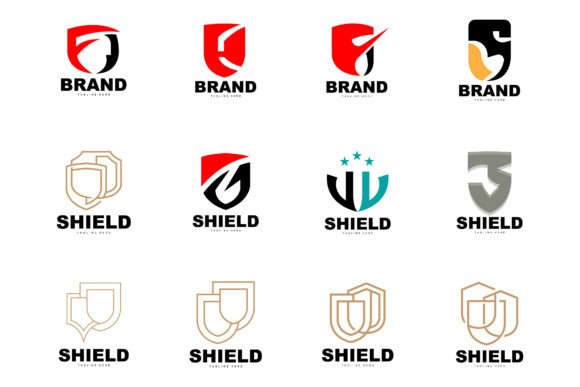
For security products, you’ll often add elements like padlocks, checkmarks, or motherboard traces inside the shield. Color palettes stay within blues, greens, or dark grays to reinforce reliability. Typography tends to be clean, sans-serif, and slightly condensed. In contrast, a simple gaming logo shield design might incorporate wings, swords, lightning bolts, or beast motifs. Gradients, outlines, and distressed textures create the high-energy look that resonates with competitive gamers. Yet the underlying shield form ensures the logo still reads as a badge of identity and protection. This dual-use potential makes the shield a smart asset for designers who work across industries. Once you master the construction of one vector shield, you can iterate rapidly for different clients or personal projects.
Key Design Principles for a Versatile Shield Logo
Regardless of the final use case, several principles make the difference between a logo that lasts and one that looks dated within months. First, simplicity. Remove any element that doesn’t directly support the message. A cluttered shield becomes illegible at small sizes and harder for people to recall. Second, scalability. Test your shield logo, antivirus protection security design at the extremes: tiny app icon and large sign. Does it hold up? Third, distinction. Research competitors to avoid unintentional mimicry. Even within the narrow category of antivirus shields, there are countless variations—rounded vs. angular, solid vs. outlined, standalone vs. embedded in a larger mark. Find a detail that makes yours unique. Fourth, color independence. Your logo should work in pure black and white before you apply any brand colors. This rule saves you when the logo needs to appear in single-color print materials or as a watermark.
Practical Implementation Tips for Designers and Business Owners
Moving from concept to daily use often uncovers gaps in planning. The following observations come from real workflows where asset organization and quality control directly influenced project success. They apply whether you’re embedding a security vector into a mobile app or distributing a gaming logo to community members.
Organizing Assets for Consistency
A single logo quickly multiplies into dozens of files: full-color, reversed, monochrome, with tagline, without tagline, horizontal lockup, stacked lockup, favicon, social media kit. Without a clear naming convention and folder structure, team members grab outdated or incorrect versions. Adopt a system like ProjectName_Shield_Color_RGB.svg and store everything in a shared company assets directory. For gaming groups, a volunteer designer might pass the torch to another member. If the vector source file goes missing, future updates become painful. Keep a master file that includes all artboards and export settings documented in a simple text file, so anyone picking it up can orient themselves quickly.
Quality Control Across Devices and Platforms
Implementation doesn’t end with exporting files. You must verify how the shield logo, antivirus protection security design renders on different screens and in various software environments. The same SVG that looks perfect in a browser may appear jagged in a Windows 10 app if not formatted correctly. Test on dark and light backgrounds. For mobile app icons, follow platform-specific guidelines for corner radii and drop shadows so your shield doesn’t get clipped or distorted by the operating system. In gaming, the logo often gets embroidered on clothing or printed on merchandise—request a sample before committing to bulk orders, as gradients and fine lines might not translate well to thread.
Long-Term Use and Evolution of Your Shield Emblem
A well-designed shield logo can serve a brand for a decade or more, but it shouldn’t become so rigid that it can’t adapt to new contexts. Schedule periodic reviews—annually or during major rebranding cycles—to assess whether the simple gaming logo shield design or security mark still matches your organization’s tone. Sometimes a subtle refresh, like updating stroke weights or modernizing the typeface, keeps the logo current without sacrificing recognition. When changes are made, propagate them systematically: update all digital instances, notify partners, and archive the old versions with clear deprecation notes. This controlled evolution prevents brand fragmentation while allowing you to stay visually competitive.
For individuals and small teams who lack a dedicated brand manager, embedding the logo’s meaning into documentation helps maintain consistent application. Write two or three sentences about what the shield represents and the feelings it should evoke. Share this with anyone who will touch the asset. This small investment reduces the chance that a well-intentioned intern applies an Instagram filter that undermines the logo’s intended authority. It also helps you, as the original creator, remember the strategic reasoning behind your design choices when revisiting the file months later.
Ultimately, a shield logo, antivirus protection security vector or a gaming badge is more than decoration. It’s a functional component of your communication system. By treating it as a living asset—integrated thoughtfully into your workflow, protected by clear guidelines, and open to sensible refinement—you ensure it continues to work hard for your projects, whether they involve protecting user data or uniting a clan of weekend warriors.